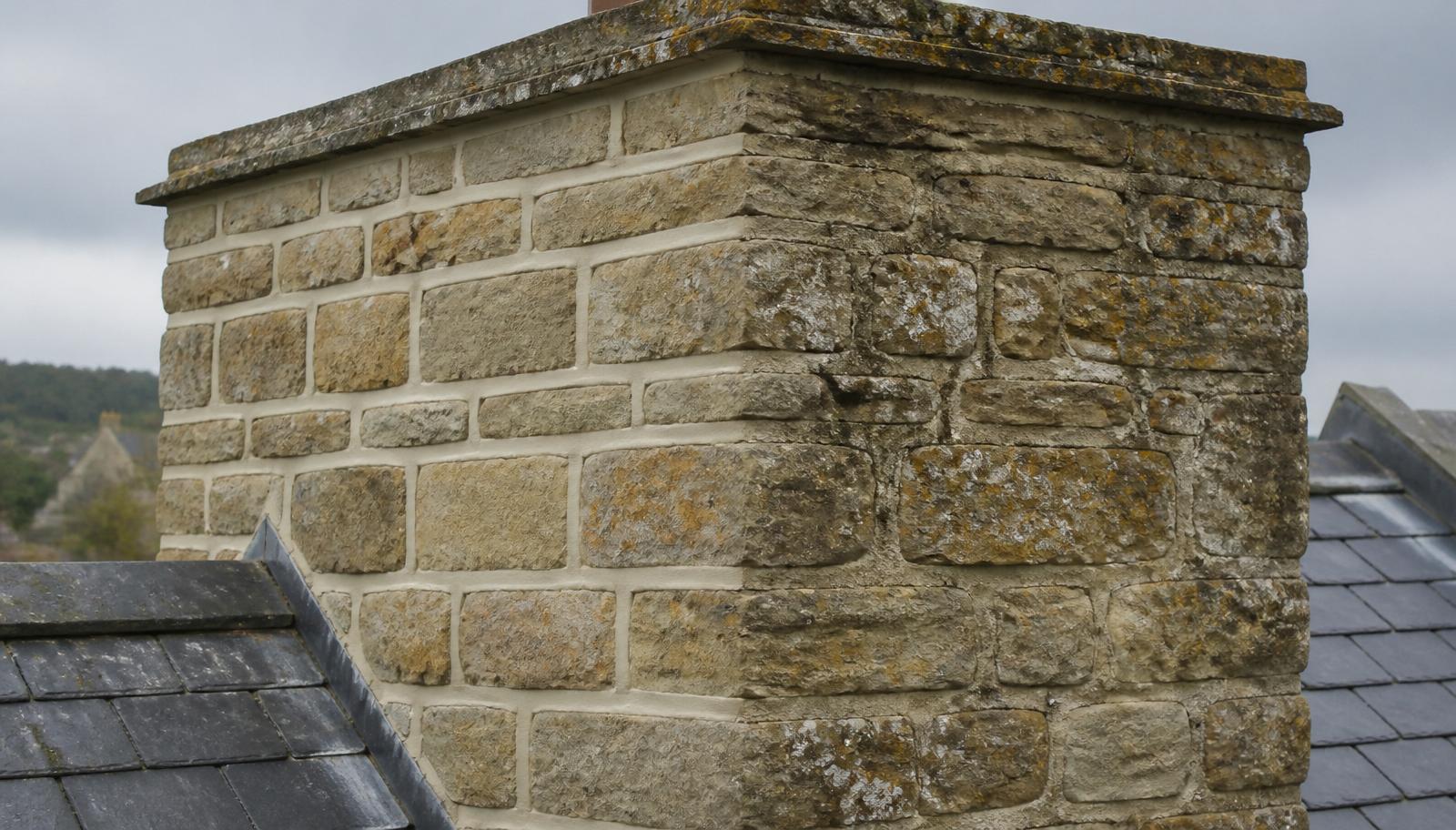
Cotswold stone chimney freshly repointed with lime mortar by White Horse Roofing Services, Oxfordshire
Repointing · Oxfordshire, Berkshire & the Cotswolds

Ridge, Verge &
Chimney Repointing
Across Oxfordshire.

Failed mortar is the quiet killer of otherwise-sound roofs. We rake out and repoint ridges, verges, chimneys and stonework in the correct mortar — lime or cement — so the fix outlasts the last one by decades.

Correct-mortar guarantee · £1M public liability

Established 2017
1,500+ Jobs Completed
15-Yr Workmanship Guarantee
£1M Public Liability Insurance
Checkatrade 9.78/10
The Service

What repointing is,
and who it's for.

Mortar is the sacrificial layer of any roof or chimney. It is meant to fail before the tiles or bricks do, protecting the expensive materials by giving up first. That is fine — until the mortar has failed to the point where tiles are moving, water is entering the joint, and the fabric of the roof is exposed.

White Horse Roofing carries out repointing to ridges, hips, verges, chimneys and stonework across Oxfordshire, Berkshire and the Cotswolds. Every job is specified with the correct mortar for the age and construction of the roof — lime where required, cement where appropriate — and finished with a written workmanship guarantee.

Who it's for

Homeowners with visibly crumbling mortar along ridges and verges, mortar falling out of a chimney stack, or open joints in stone or brickwork. Owners of period properties where hard cement mortar has been used incorrectly and is causing tiles or bricks to crack. Buyers whose survey has flagged mortar failure.

When it's needed

As soon as mortar is visibly falling out of joints, ridges are moving under foot, or vertical rust stains appear below any brick or stone joint. Repointing done early prevents the tile or brick behind it from failing next — and it is always cheaper than the repair after the failure.

Why professional

Mortar choice is technical. Cement mortar on lime-built heritage properties causes the underlying tiles or bricks to crack as they can no longer move naturally. Lime mortar on modern cement-built roofs is over-specified and expensive. Getting the mix wrong accelerates the very failure you are trying to prevent — a common outcome of DIY and unqualified work.

What Happens If Ignored

The cost of leaving it
until next winter.

Once mortar fails, the tile or brick it was bedding becomes the next thing to move. Ridges shift, verges lift in the wind, chimney courses lean, and water enters the roof through joints that used to be sealed. Left long enough, a £600 repoint becomes a £6,000 ridge and verge rebuild with tile replacement.

Common problems we see

  • Ridge mortar crumbling and falling into the guttering
  • Verge mortar failed, allowing water into the roof at the gable ends
  • Chimney pointing gone, courses moving, water entering the flue
  • Cement mortar on heritage roofs cracking the stone or tiles

Mistakes to avoid

  • ×Using cement mortar on heritage lime-built roofs — accelerates tile and stone failure
  • ×Pointing over failed mortar without raking out — new mortar has no bond and falls off within 12 months
  • ×Skimping on mortar depth — 15 mm minimum for a lasting joint; anything less is a cosmetic fix
Our Process

Five steps. No day rates.
No surprises.

01

Survey

Full inspection of ridges, verges, hips and stack. Existing mortar identified and appropriate replacement mortar specified.

02

Fixed Quote

Written itemised quote covering scaffold, rake-out, materials and repointing — fixed price with warranty period stated.

03

Rake Out

Failed mortar raked out to a proper depth (minimum 15 mm) with hand tools — never with a disc cutter on heritage roofs where it damages the surrounding material.

04

Repoint

New mortar applied in the correct mix, well pressed into the joint, and struck or weathered to the appropriate finish.

05

Cure & Sign-Off

Mortar allowed to cure appropriately (kept damp in hot weather, protected in wet). Written workmanship guarantee issued.

What You Get

Specific benefits.
No vague claims.

Every point below is something we do on every job — not a marketing line. Ask us at the survey and we'll show you exactly how.

Correct Mortar Every Time

Lime, cement or NHL specified for the age and fabric of the property.

Proper Rake-Out Depth

Minimum 15 mm so the new mortar actually bonds and lasts.

Struck to Finish

Joints weathered or struck to shed water — not just filled.

Heritage Sympathetic

Lime pointing on period properties, matched in colour and grain.

Fully Insured

£1M public liability on every job.

Written Guarantee

Workmanship warranty in writing appropriate to the scope.

In Detail

The specifics —
materials, methods, situations.

Mortars we use

Lime mortar (hydraulic and non-hydraulic) — for heritage, listed, Cotswold-stone and lime-built brick properties where movement and breathability are essential. Colour and grain matched to the existing pointing.

NHL 3.5 and NHL 5 — natural hydraulic lime mortars for more exposed or higher-strength situations while remaining sympathetic to older fabric.

Cement mortar (typically 3:1 or 4:1) — for modern properties, ridges and verges where the surrounding fabric can accept a harder mortar. Always specified to the situation, never as a default.

Where repointing is needed most

Ridges and hips — the most weather-exposed line on the roof, and usually the first mortar joints to fail. Dry-fixed alternatives available where a modern finish is acceptable.

Verges — the gable-end mortar bedding, which lifts in the wind if the mortar fails. Dry verge systems offered as a longer-life alternative.

Chimney stacks — pointing failure here lets water enter the flue and the surrounding brickwork.

Stonework and brickwork walls — where required, we also repoint external walls in appropriate mortars to complement roof work.

Traditional lime vs modern alternatives

On the ridges and verges of modern roofs, dry-fix systems (mechanically fixed with hidden clips and rubber gaskets) offer a longer-life alternative to bedded mortar and remove future repointing cycles altogether. On heritage properties, traditional lime bedding is usually the correct answer for appearance and compatibility with the fabric — but we can discuss both options at survey.

FAQ

Everything homeowners
ask us about repointing.

Something not covered? Call 07522 468971 and we'll answer it directly.

How much does repointing cost?+

Ridge and verge repointing typically £450 to £1,600 depending on size and access. Full chimney repointing £600 to £1,400. Every price is fixed in writing after survey — including scaffold where required.

How long does repointing last?+

A properly executed repoint in the correct mortar should last 25 to 50 years — often longer for lime mortar on heritage buildings. Poorly executed pointing can fail in 12 months.

What is the difference between lime and cement mortar?+

Lime mortar is softer, more flexible, and breathable — allowing older buildings to move slightly and let moisture out. Cement mortar is harder and less flexible, appropriate for modern construction but damaging when used on heritage fabric. Using the correct mortar is the single most important decision in a repointing job.

Do I need scaffolding?+

Ridge and chimney repointing usually needs scaffold or tower for safe working. Verge work sometimes possible from ladder. Access requirements are agreed in advance and included in the fixed quote.

Should I dry-fix or repoint the ridges?+

On modern roofs, dry-fix ridge systems are usually the better long-term option — no future mortar failure. On heritage roofs, traditional lime bedding is normally required for appearance and compatibility. We advise on both at survey stage.

Do you offer emergency repointing call-outs?+

Yes. For storm damage, active leaks and make-safes across Oxfordshire, Berkshire and the Cotswolds, call us and we will aim to get a surveyor to you the same day. Emergency temporary works can usually be carried out on the first visit so the property is watertight before a permanent repair is scheduled.

Is the quote free?+

Yes for owner-occupied properties. For homes you have not yet bought there is a £100 pre-purchase survey fee — fully deducted from the final quote if you go ahead. Every quote is fixed price, in writing, itemised and never a day rate.

What guarantee do you offer?+

Full re-roofs carry a 15-year workmanship guarantee. Flat roofs carry a 10-year workmanship guarantee. Repairs are covered by a written workmanship warranty appropriate to the scope. All work is backed by £1M public liability cover.

How do payments work?+

A deposit secures your slot in the diary. The balance is paid by bank transfer on completion. On larger projects we offer sensible stage payments so you are never paying ahead of the work delivered.

Which areas do you cover?+

Oxfordshire, Berkshire and the Cotswolds — including Oxford, Abingdon, Didcot, Wantage, Witney, Reading, Newbury, Cirencester and Faringdon. If you are close to the edge of that radius, call us — we can usually help.

Ready to sort it?

Book a same-day survey
and a fixed-price quote.

Family-run, fully insured, and backed in writing. Every quote is fixed price — no day rates, no drift. Call us or send a few details and we'll be in touch today.

15-year workmanship guarantee · Checkatrade 9.78/10 · Same-day surveys